Really impressive use of 3D skills and software throughout each of these motions, the key turning points transitioning a frame from one another are excellently crafted. The visual elements clearly show a sense of a four dimensional space, seeing this as not a restriction, but as opportunity to build & create something quite unique.
CCTV INK -
TROUBLEMAKERS IDENT -
DARTY IDENTS -
Showing posts with label TOY. Show all posts
Showing posts with label TOY. Show all posts
Wednesday, 11 January 2012

THE VINYL FRONTIER
_
Interesting title sequence / introduction into a film created to understand the culture and roots to designer toys. The quick piece of video, explains briefly how an artist can use a 3D object to allow a much broader interaction with the product. By taking to contexts and bringing them together in a new format, the outcome becomes more effective in reaching it's audience.
THE VINYL FRONTIER
Interesting title sequence / introduction into a film created to understand the culture and roots to designer toys. The quick piece of video, explains briefly how an artist can use a 3D object to allow a much broader interaction with the product. By taking to contexts and bringing them together in a new format, the outcome becomes more effective in reaching it's audience.
THE VINYL FRONTIER
Tuesday, 10 January 2012
KIDROBOT - MUNNY
As you can see, these pieces of graphic motion and animation are primarily coloured, to add more value to the feel and mood of the clip. In order to achieve that, it needs to speak to the audience correctly. In this case it clearly speaks to the younger generation and gives a much more playful process. Allowing you to simultaneously understand the visual language being provoked.
MUNNY ON THE RUN! -
NEW YORK STORE OPENING -
MUNNY ON THE RUN! -
NEW YORK STORE OPENING -
TADO
ABOUT:-
'' Mike and Katie are TADO, the UK based duo whose darkly adorable characters have taken the design and illustration worlds by storm. The pair live and work in Sheffield, UK where they churn out fun for clients and happy people alike.
Their portfolio includes a vast range of projects from fashion through to advertising and their artwork has been exhibited worldwide with several international solo shows. The pair graduated from Leeds Metropolitan University in 2002 and immediately set out to carve a niche for themselves in the world of commercial illustration.
Everything they do is produced in total collaboration - whether it be taking turns in painting, scribbling or clicking.
Check out their website to see what they've been up to recently and who they've been doing it with. ''
WORK:-

TADO
'' Mike and Katie are TADO, the UK based duo whose darkly adorable characters have taken the design and illustration worlds by storm. The pair live and work in Sheffield, UK where they churn out fun for clients and happy people alike.
Their portfolio includes a vast range of projects from fashion through to advertising and their artwork has been exhibited worldwide with several international solo shows. The pair graduated from Leeds Metropolitan University in 2002 and immediately set out to carve a niche for themselves in the world of commercial illustration.
Everything they do is produced in total collaboration - whether it be taking turns in painting, scribbling or clicking.
Check out their website to see what they've been up to recently and who they've been doing it with. ''
WORK:-

TADO
Clutter Magazine - Designer Toy Awards 2011
This magazine features designer toy awards from 2011. Interviewing and showcasing a number of artists and winners, that have proven their own skills throughout the toy design industry. In order to extend my research, I need to be able to gather a broad variety of different pieces of information, images and artists that regularly create toys for exhibitions.


" Issue 16 features artist interviews, stories, editorials, and an awesome Designer Toy Awards 2011 winners review. The cover of this brand spankin new issue was created especially for us by Pete Fowler! Hope you guys love the Issue 16 as much as we do!
Contents include:
:: Pete Fowler
:: The DTA's 2011
:: Sucklord
:: 3D Printing
:: Blamo Toys
:: 64 colors
:: FriendsWithYou
:: Paul Shih
:: Josh Herbolsheimer
:: The Fort
:: Pete Fowler
:: The DTA's 2011
:: Sucklord
:: 3D Printing
:: Blamo Toys
:: 64 colors
:: FriendsWithYou
:: Paul Shih
:: Josh Herbolsheimer
:: The Fort
Details: 72 pages, full color. 8.125 x 10.875 inches.
Cover Price: $9.99 "
Cover Price: $9.99 "
Designer Toys - WIKIPEDIA
Wikipedia definition of 'Designer Toys' - http://en.wikipedia.org/wiki/Designer_toys
Designer toys is a term used to describe toys and other collectibles that are produced in limited editions (as few as 10 or as many as 2000 pieces) and created by artists and designers. Designer toys are made of variety of materials; ABS plastic and vinyl are most common, although wood, metal, and resin are occasionally used. The term also encompasses plush, cloth and latex dolls. Creators of designer toys usually have backgrounds in graphic design, illustration or self-described low brow art; some are classically trained in art and design, while others are self-taught. Designer toys first appeared in the 1990s and are still in production today.
Overview

Designer Plush
Designer toys is a term used to describe toys and other collectibles that are produced in limited editions (as few as 10 or as many as 2000 pieces) and created by artists and designers. Designer toys are made of variety of materials; ABS plastic and vinyl are most common, although wood, metal, and resin are occasionally used. The term also encompasses plush, cloth and latex dolls. Creators of designer toys usually have backgrounds in graphic design, illustration or self-described low brow art; some are classically trained in art and design, while others are self-taught. Designer toys first appeared in the 1990s and are still in production today.
Overview
A typical example of designer toys are the Qee series, produced in Hong Kong by Toy2R. The standard size of Qee figures is 2" high, but 8" and 16" figures for their famous uglydolls which are also produced. Qees vary in their design, usually with the same basic body type, but with head sculpts that may be of a bear, a cat, a dog, a monkey, or a rabbit. Variations of the Qee are the Toyer with a head that resembles a cartoon skull; the Knuckle Bear, which was created by Japanese character designer Touma, and resembles a graffiti-stylecaricature of an anthropomorphized bear; and the Qee Egg, a bird's egg with arms and legs. Blank Qees are produced in 2" and 8" sizes; these figures may be of any Qee sculpt, but are packaged unpainted, as do-it-yourself pieces. Each piece is designed by an artist and carries its own aesthetic theme. Each 2" figure is packaged with an optional keychainattachment.
Another example of designer toys is the Dunny series, produced by the American company Kidrobot. Dunny figures may be considered the Western counterpart of the Chinese Qeeand the Japanese Be@rbrick. Dunny are a series of figures that resemble anthropomorphized rabbits in a cartoon style (a design originally illustrated by graffiti, stencil, and comicartists) which are produced as 3", 8", and 20" figures. There is a variation of the Dunny figure called a Munny, which resembles a monkey, and is only sold as an unpainted do-it-yourself piece. Some creators of designer toys are Hong Kong-based Michael Lau, credited with the establishment of the Urban Vinyl movement; Devilrobots, a five-person design team from Japan, known for their television character named TO-FU Oyako;[1] American concert poster artist Frank Kozik's Mongers series and Labbit character; and British illustrator James Jarvis' cast of characters, produced as vinyl figures of varying sizes.
Most vinyl toys are produced in factories in China, though some designers have shifted production to Japan where higher quality materials such as clear vinyl are used. Designer toys are rarely produced in the United States due to environmental restrictions on the production of vinyl, some exceptions are resin and plush toys.
Urban vinyl
Urban vinyl is a type of designer toy, featuring action figures in particular which are usually made of vinyl. Although the term is sometimes used interchangeably with the term designer toy, it is more accurately used as a modifier: not all designer toys can be considered urban vinyl, while urban vinyl figures are necessarily designer toys, by virtue of the way in which they are produced. Like designer toys in general, urban vinyl figures feature original designs, small production numbers, and are marketed to collectors, predominantly adults.
The urban vinyl trend was initiated by artist Michael Lau, who first created urban vinyl figures in Hong Kong in the late 1990s.[2][3] Other creators of urban vinyl figures are Japanese artist and designer Takashi Murakami whose work has been exhibited in the Museum of Contemporary Art, Tokyo, and the Museum of Fine Arts, Boston, Australian designer Nathan Jurevicius's Scarygirl, based on characters from his comic of the same name, and produced in conjunction with Hong Kong company Flyingcat, and former graffiti artist KAWS. Los Angeles based musician and designer Craig Anthony Perkins created the Broken Heart Robot character[4]
Urban vinyl figures are designed primarily by illustrators, graffiti artists, musicians and DJs from urban areas in Asia (especially Japan and Hong Kong), North America (especially the United States), and Europe.
An offshoot of hip hop and youth-oriented popular culture, urban vinyl often depicts real-life figures from Asian and American culture, particularly artists who perform in a hip-hop or related styles. Two examples are Lau's depiction of the LMF rappers from Hong Kong, and figures based on the members of the virtual electronic band Gorillaz, produced by Jamie Hewlett and made by Kidrobot.
Urban vinyl is commonly designated as either Eastern Vinyl, including anything designed and produced in Asia or Australia, or Western Vinyl, encompassing pieces which are designed and produced in North America, South America, or Europe. Urban vinyl figures have become collectible items. Rare pieces may sell for hundreds or even thousands of dollars.
Resin toys
Some artists create their toys using synthetic resin material and resin casting. After casting the resin toy receives adjustments in its details, sometimes being superficially cast on some parts. The toy can be finished using automotive paint by aerosol and sometimes receives a varnished layer above the dry painting.
The process of making resin toys is more labor intensive and time consuming than industrialized vinyl toy production, which in most of cases are made identical and in large quantities. But resin casting allows artists to produce toys in small numbers. Most vinyl factories will only produce toys in large series. Resin toys have become a way for less established artists to produce a toy without the large financial investment required to produce a vinyl toy. Unlike most vinyl toys, resin toys are usually sculpted, cast, and painted by a single artist. In 2009 mphlabs produced a series of resin figures by American east coast artists Lou Pimentel and Brent Nolasco.

Designer Plush
Designer plush, a subcategory of designer toys, are soft, stuffed dolls created in limited quantities by artists and designers. Common designs include anthropomorphized animals or fantastic human likenesses, although designer plush dolls often feature entirely unique character designs. Designer plush dolls are usually given names and personas, with their distinctive personalities described on their tags or in booklets included in their packaging.
One producer of designer plush is Friends With You, a commercial art and design collective based in Miami, Florida. Their work is characterized by a cute yet bizarre aesthetic, and exhibits a hand-made quality, even in pieces that are machine-made. In addition to their plush dolls, Friends With You also create modular wood toys, and motion graphics for companies such as Sony, MTV, Nike, and Columbia Records.
Another type of designer plush are Uglydolls, created by independent toy designers David Horvath and Sun-Min Kim under the label Pretty Ugly. Their first products were 12" plush dolls based on drawings by David Horvath’s, and handmade by Sun-Min Kim. Pretty Ugly has also produced 7" versions of their character designs, called Little Uglys, 24" versions called Giant Uglys, 4" miniatures intended for use as keychains, and in a departure from the plush medium, 7" Vinyl Uglys. With Ugly Dolls being featured in motion pictures like Zuthera and in major specialty stores the brand has gone from exclusive to Mass appeal in mainstream.[6]
Another designer plush line are Shawnimals, originating in Chicago, Illinois, with designs such as "Pocket Ninja", "Splug", and "Son of Moustachio". All of these characters exist in a land called "Shawnimaland". Shawnimals released series 1 of "Micro Plush" blind box toys in December 2007 based on their Ninjatown line of characters. The majority of the characters involved all revolve around the Wee Ninja character, and are licensed to the Squibbles + Rotofugi partnership. Series 2 is scheduled for release near or on the same day as its Ninjatown Nintendo DS game.
Other examples of designer plush include Hellhounds, created by Japanese character designer Touma and produced by Play Imaginative; the Gloomy Bear collection by Japanese graphic designer Mori Chack; Stuffed Animal World and the Amalgamated Menagerie by Tyler Poncho Toys; the Furilla series by American artist Toren Orzeck; the Grunions by American production company Goblinko, the Doudoupop brand by French designer Jamous; the Swedish Spök-spök brand by designer Daniel Svanberg, presently consisting of four characters named Spök-spök, Spökelina, Toofhairy, and the ever angry Baron von Kon, living in an ideal world that's a hybrid of fond childhood memories and traditional Swedish iconography; and Circus Punks, knockdown dolls (simple dolls with round, sand-filled bases used in carnival games) which are screen-printed and sewn by hand, each featuring a design by a different artist. While in Asia, Thunderpanda or Eric_Wirjanata released a series of limited edition of Lemi the Space Wanderer plush.
Sunday, 8 January 2012
Scale Modeling - WIKIPEDIA
1:6 scale modeling
From Wikipedia, the free encyclopedia
1:6 scale modeling, a.k.a. Playscale Miniaturism[1], is a hobby focusing on the collecting and/or customization of commercially produced 1:6 scale action figures and accessories.[2]
The term "Playscale" originally represented the domestic, urban or civilian expressions of the scale, especially when coed, and not, usually, exterior genres, like military and adventure themes. As such, it came to represent cross-genre miniaturism, as well, which routinely includes elements from the former. Miniaturists who focus exclusively on exterior themes tend to prefer the protologism sixthscale.
This scale is fairly new to the modeling world, having been standardized in the early 1960s through Barbie and G.I. Joe toys (it is not clear exactly when these figures were first used for mainstream modeling purposes). Most of this style of miniaturism is constructed around posable plastic figures. The average 1:6 figure stands roughly 30 cm (12 in) tall, representing a 1.8 m (6 ft) tall human. Figures can be outfitted in a wide variety of mass produced, limited production, and custom clothing and items. Some people undertake vehicleprojects ranging from tanks and helicopters to sand rails and jeeps. Talented "customizers", miniaturists specializing in construction of one-off and limited production items or the extensive modification of stock products, are limited only by their imagination.
A significant focus of supporting manufacturers is military subjects of many different eras, but many crossover miniaturists will reassign them to science fiction, fantasy, pop culture, or civilian themes. Further emphasis on the military genre can be found in the article, Military miniaturism.
Tuesday, 3 January 2012
ANGRY WOEBOT
ABOUT:-
WORK:-


WOEBOT
" As a child growing up in Kalihi Oahu, his friend stole a book from his older brother the book was called Spray Can Art by Henry Chalfant & James Prigoff it was the first time Aaron experienced NYC graffiti. Characters and Styles by Mode 2, Seen and Dondi White also influenced by popping, breaking and the early hip hop movement Aaron was all about it, it wasn't later until his early teens he got the true taste of graffiti, while growing up in southern california which was neighborhood driven and about tagging and getting your name up. It was in vegas where Aaron was introduced to true graffiti, whole productions, heavens, pieces and the re-introduction of the Golden age of hip hop music. It was then Aaron got the itch to design Characters, letters and the early influence of design. Aaron Martin was born on the island Oahu 1977, Hawaii. Most of his childhood was spent growing up and moving from Southern California to Nevada before finally landing back into Hawaii during his Junior year in high school. In 1999 a car accident changed everything; this life-threatening experience inspired him to leave the island once again, this time to Seattle, Washington. Inspired by the rain and being indoors, he started playing around with different art mediums again. He then left back to Hawaii with a new perspective, " Being close to death trapped in metal changed everything. Almost 18 years later but its just like it happened yesterday life's been crazy and unbelievable I been blessed with the best Family and Homies ever, on top of that I been rocking out full time doing what I love just painting and meeting the coolest people." Aaron had his first show in 2002 and has not stopped. Showing in galleries up and down California the east coast, have even showed in shows that have traveled from the U.S. to South East Asia, Germany & South Pacific New Zealand and Australia. His focal medium is acrylic paintings on wood and canvas. Using minimal colors and detailed character design, these paintings are usually comprised of stressed out emotional pandas. The pandas tend to represent the story of struggle. "Everyone uses the panda of an icon of something cute and harmless, but I love painting them disgruntled and angry; it takes people by surprise.” Aaron has painted well over a thousand of them. His characters tend to be somewhat repetitive, even anonymous in some instances, but always full of personality and emotion. Being known to rock the Panda from East to West, it's just a small piece of what Aarons capable of doing. Besides working with acrylics, he also sews costumes, plush figures, sculpts, and dabbles in graphic design and illustration. "Angry Woebots was never a name it was a concept of what I created, concept of my art, from the car accident until now, from being in a dark place and coming out of the situation fresh and ready to build, getting slammed into metal actually woke me up. Rocking art was the doorway it’s been nonstop ever since.” -Woeski " |
WORK:-


WOEBOT
MAD
ABOUT:-
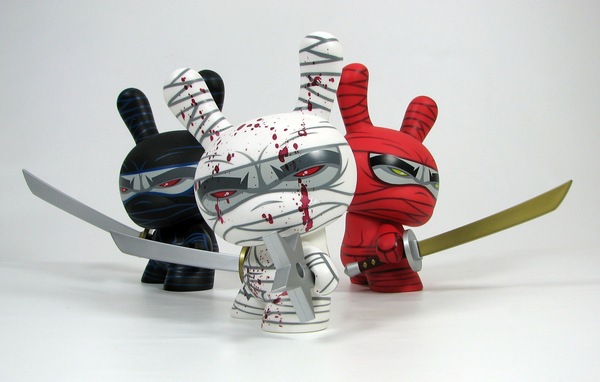
'' Jeremy "MAD" Madl
Toy Designer, Illustrator, Husband, & Father
I've been professionally illustrating and designing toys for over 13 years. Over my career I've worked with clients such as Kidrobot, YUM Brands, Pepsi, Scion, NFL, Upper Deck,
Mattel, Spin Master Toys, and Cartoon Network on a variety of todays hottest and largest brands. Collaborating on projects ranging from promotions to packaging, character design to retail and premium toys.
I've worked non-stop on my own licensed artwork and toy brands under the “MAD Toy Design” label for the past 9 years. My first production figure line called the MAD*L™ has been one of the hottest brands on the collector market since it first released in 2004 and continues to fly off the shelves globally with each new release.
I keep a full arsenal of new products in development at all times ranging from toys, tee's, prints, and more. ''
WORK:-



MAD
'' Jeremy "MAD" Madl
Toy Designer, Illustrator, Husband, & Father
I've been professionally illustrating and designing toys for over 13 years. Over my career I've worked with clients such as Kidrobot, YUM Brands, Pepsi, Scion, NFL, Upper Deck,
Mattel, Spin Master Toys, and Cartoon Network on a variety of todays hottest and largest brands. Collaborating on projects ranging from promotions to packaging, character design to retail and premium toys.
I've worked non-stop on my own licensed artwork and toy brands under the “MAD Toy Design” label for the past 9 years. My first production figure line called the MAD*L™ has been one of the hottest brands on the collector market since it first released in 2004 and continues to fly off the shelves globally with each new release.
I keep a full arsenal of new products in development at all times ranging from toys, tee's, prints, and more. ''
WORK:-



MAD
KIDROBOT
ABOUT:-
" The designer toys sold at Kidrobot are the centerpieces of a new and growing artistic movement. Many artists that work with Kidrobot have gained celebrity status and have huge followings, including USA artists Tristan Eaton, Paul Budnitz, Frank Kozik, Tim Biskup, Huck Gee, Joe Ledbetter, Tara McPherson; the design collective eBoy (Germany); Devilrobots & Mad Barbarians (Japan); Tilt and Mist (France); TADO and Pete Fowler (UK); Nathan Jurevicius (Australia); and many others.
Many Kidrobot toys are extremely rare and collectible and cannot be found anywhere else in the world. Toy artists often choose to create a series of only a few hundred or a few thousand pieces, so once a toy is sold out, it's sold out forever. Kidrobot toys retail from $6 to $20,000, and may appreciate in value over time.
The Museum of Modern Art (MoMA) acquired 13 Kidrobot toys in late 2007, which are now part of the museum’s collection. Three toys are currently on display as part of the museum’s “Just In: Recent Acquisitions from the Collection” installation, on view through November 30th, 2008.
Paul Budnitz introduced Kidrobot’s vibrant line of apparel in 2006. Based on Kidrobot’s unique aesthetic, and produced in limited edition, the company’s much sought-after apparel line can only be found at Kidrobot stores, online at kidrobot.com, and in select retailers worldwide
Kidrobot operates store-galleries in New York City, San Francisco, Los Angeles, Miami and London. Kidrobot products can also be found at select boutique retailers around the world. "
Many Kidrobot toys are extremely rare and collectible and cannot be found anywhere else in the world. Toy artists often choose to create a series of only a few hundred or a few thousand pieces, so once a toy is sold out, it's sold out forever. Kidrobot toys retail from $6 to $20,000, and may appreciate in value over time.
The Museum of Modern Art (MoMA) acquired 13 Kidrobot toys in late 2007, which are now part of the museum’s collection. Three toys are currently on display as part of the museum’s “Just In: Recent Acquisitions from the Collection” installation, on view through November 30th, 2008.
Paul Budnitz introduced Kidrobot’s vibrant line of apparel in 2006. Based on Kidrobot’s unique aesthetic, and produced in limited edition, the company’s much sought-after apparel line can only be found at Kidrobot stores, online at kidrobot.com, and in select retailers worldwide
Kidrobot operates store-galleries in New York City, San Francisco, Los Angeles, Miami and London. Kidrobot products can also be found at select boutique retailers around the world. "
WORK:-


The Beast Brothers
ABOUT:-
WORK:-

THE BEAST BROTHERS
" Born in an Aztec temple, deep inside the jungle of Mexico, The Beast Brothers spent most of their childhood developing their unique and distinct style of art. Through the years this royal pair have used their mighty twin powers to create awesomeness!
|
WORK:-

THE BEAST BROTHERS
Monday, 2 January 2012
Sticky Monster Lab
ABOUT:-
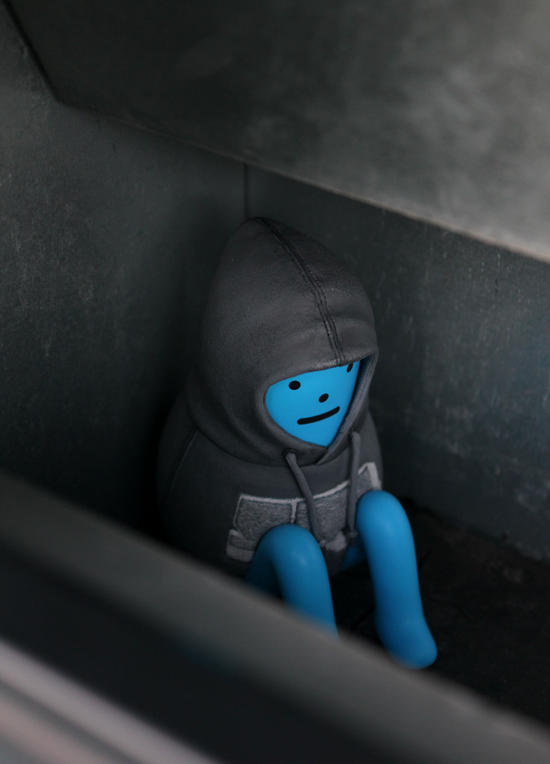
Sticky Monster Lab is a Creative Studio in Korea, founded in 2007 by 3 founding members from each different field (Motion graphic, Illustration and Festival managing) and now a Figure artist has joined on board as another official member.
Sticky Monster Lab’s each member have their own profound experience and know-how, which is why the relation between them create the positive synergy effect and its unique and various strength helps them to overcome the limits of a regular small studio.Character building is one of the Sticky Monster Lab’s outstanding unique systems; one total solution of a plane 2D character becomes alive by adding motions, and then finally, into a real figure character. Produced and preplanned before the beginning of the whole process, the final products of each step as a character, animation and figure are complete in their own format: therefore, this project shows the individuality but related story of “Monsters” virtual world.
This unique and creative style of process makes Sticky Monster Lab distinctive from other design studios or artists.
WORK:-


STICKY MONSTER LAB
HUCK GEE
Huck Gee has very much earned his place in creating pieces of iconic Toy Design allowing him to produce exhibitions and carefully crafted set's of Toys that have collectors wanting worldwide. There is a definite style that has been used throughout his work, using Asian pop culture as his main influence.
ABOUT: -
WORKS: -


HUCK GEE
ABOUT: -
A UK native, Huck Gee is a contemporary artist, illustrator, toy maker, and designer best known by toy enthusiasts for his iconic “Skullhead” character and “Gold Life” art creations. Heavily influenced by Japanese and Hong Kong pop art, Gee calls his style “Bastardized Asian Pop Culture”.
The demand for Huck’s Custom Toy Art and illustrations has grown quite immense, with small runs of hand crafted Art Toys and original prints selling out in seconds online and shipping to art collectors worldwide. Huck’s works have been exhibited in galleries worldwide and in 2007 his “Hello My Name Is” 8” Dunny was accepted into the permanent collection of the Museum of Modern Art in NYC. In addition, Huck has also consigned several pieces for one of the world’s leading fine art auction houses: Christie’s Auction House.
He’s released numerous limited production toys through Kidrobot including some of the most exclusive and sought after Dunnys to date, figures for The Standard, DJ Qbert, and a series of figures for Barney’s New York which came dressed in the 2005 spring collections of five of the world’s most famous fashion designers: Marc Jacobs, Dries Van Noten, Jil Sander, Rick Owens, and Duckie Brown. His extraordinary skills with customizing vinyl toys earned him the title of Best Customizer in the 2009 Kidrobot Artist Awards.
Most recently Huck collaborated with Ken Block and DC Shoes for Ken’s Monster World Rally Team WRC logo entitled “Blockhead”. Coinciding with this project were several limited edition shoe and clothing runs.
Huck currently maintains a studio in San Francisco and when not busy planning world domination, he spends his free time playing with his daughter and pretending to be a racecar driver. Not necessarily at the same time.
WORKS: -


HUCK GEE
Subscribe to:
Posts (Atom)